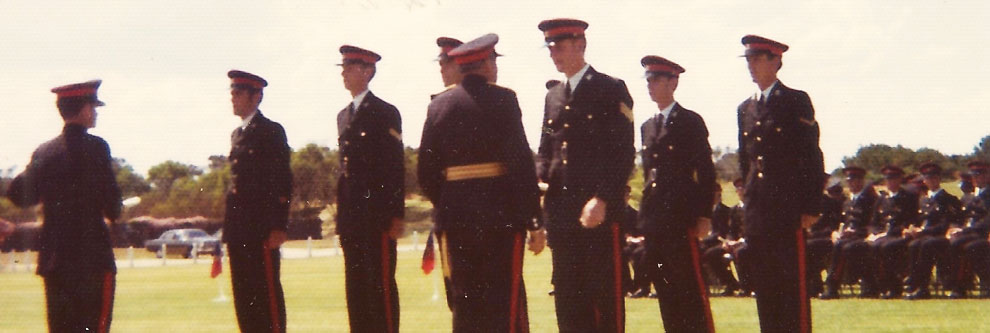
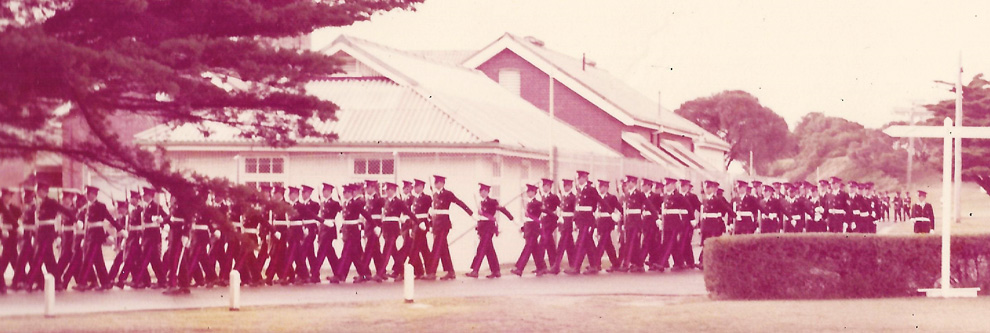
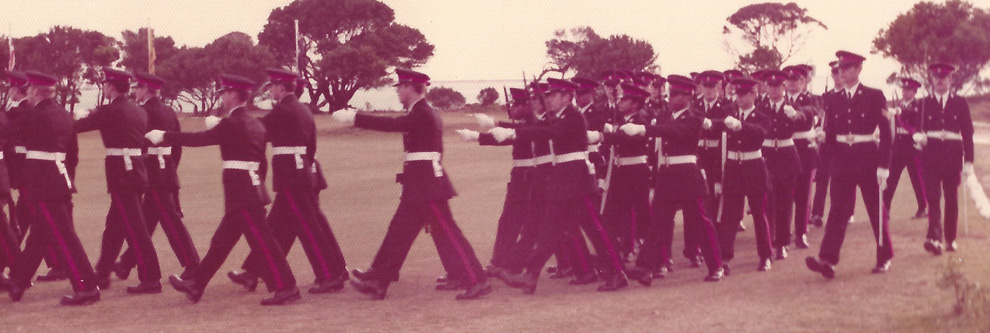
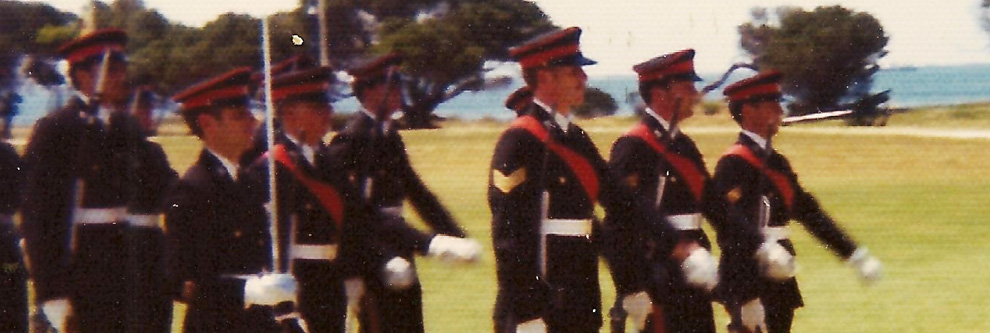
OCS Portsea Alumni Class of Dec 1973

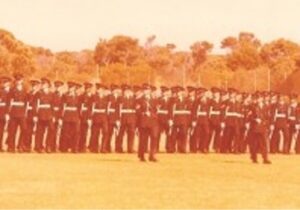
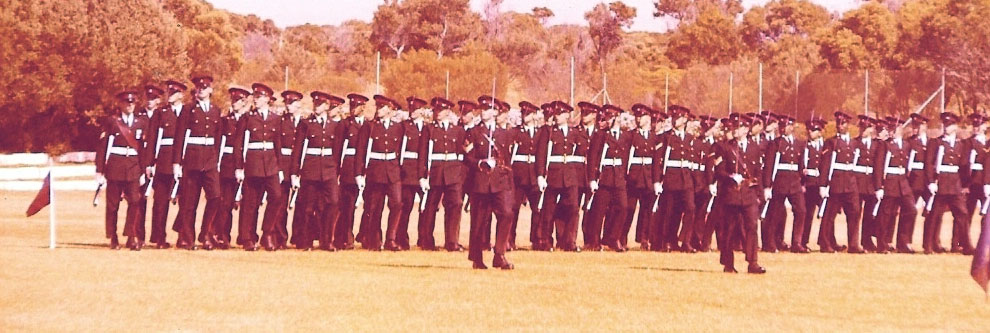
The aim of this website is to record for posterity the year that was: the life and times of the Officer Cadet School of Australia, graduating class of 14 December 1973.  The records on this site include our training which commenced on 11 January 1973, graduation, post-graduate military service, civilian life (where posted) and reunions.


Read More

The weather is magic here at present

Tue 14, Apr 2026

Vinnie and another compatriot Nguyen Tri Dung in the Dec ’73 graduating class, returned to their homes and new postings with ARVN immediately following graduation. Regrettably Tri Dung was never heard from again. Vinnie himself was assumed to be deceased by our class as no one had heard from him in some 20+ years.

As Vinnie recounts, one day whilst tending his modest garden, he was inspired to search on-line for OCS and in no time at all he’d found our class list where he was listed as deceased. Vinnie then set about rectifying that anomaly with some urgency. The Graduation Class of December 1973 were frankly overjoyed to a man to hear from Vinnie as he was a popular and highly regarded member of our tight-knit group.

Vinnie attended our 45th Class reunion in Brisbane and many classmates have kept in touch with him in the subsequent years that followed.

Following the fall of South Vietnam in April 1975 and “Re-unification” that occurred the following year, Vinnie was one of many sent for re-education for almost three years. The initial stages of which were in solitary confinement and his immediate task was to commit to paper everything that he had learned in Australia including organisations and staff lists. That would have been a daunting task for any of us!

Some 20 years were endured by Vinnie without a national ID card, or papers as we might call them. This means no medical care or Governmental support and that continues to this day. The policy and practice applied to anyone in the employ of the SVN Government and ARVN in particular. Vinnie married and had two children who are now resident in the USA and his wife passed some 20 years ago (RIP).

Vinnie is very pleased to still be recognised by his fellow classmates and he enjoys enormously contact with his former Australian brothers-in-arms.

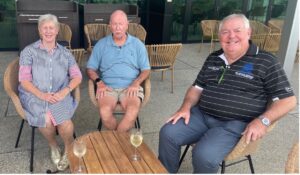
Rod Chisholm and Lee Quang Vinh met several times over a couple of days in Saigon on 13 & 14 Feb. We enjoyed a great reunion together along with six other retired ADF officers including Paul Trevarthen pictured below (Schey ‘72), Chris Wrangle, Ian Errington, Bruce Scott all OCS graduates along with Cris Anstey and Ross Boyd both RMC Duntroon graduates and Doug Trevarthen who is a Captain with Virgin Australia.
Vinnie is in fair nick and is very happy to connect with old friends. He proudly wears a very stylish black beret sporting a mini, OCS badge.  He sends his best wishes to all. Email is [email protected]

I for one hope to see him again before permanent discharge…….

Rod Chisholm

Vinnie’s reply;

Hi Rod

I hope you and everyone in your family ( your wife, your children, your grand-children ) are always healthy, happy

I am very glad and appreciated what you have done to connect me with all the classmates in the OCS graduating class 73

Would you send my sincere regards to all our Portsea friends who had helped, and been friendly to me during the period of the terribly hard training course…at that time, if I had not received any helps from them, I never would have received my  2nd Lieutenant and badge in the graduation night to become an AVRN officer…

Dear Rod, please send my thanks to all and confirm that I love, respect and miss you guys very much

Thank-you Rod for your kind and friendly meetings last Feb.

Warm regard

Vinnie


Stepping up as a voice for veterans

Wed 05, Nov 2025

Getting into advocacy

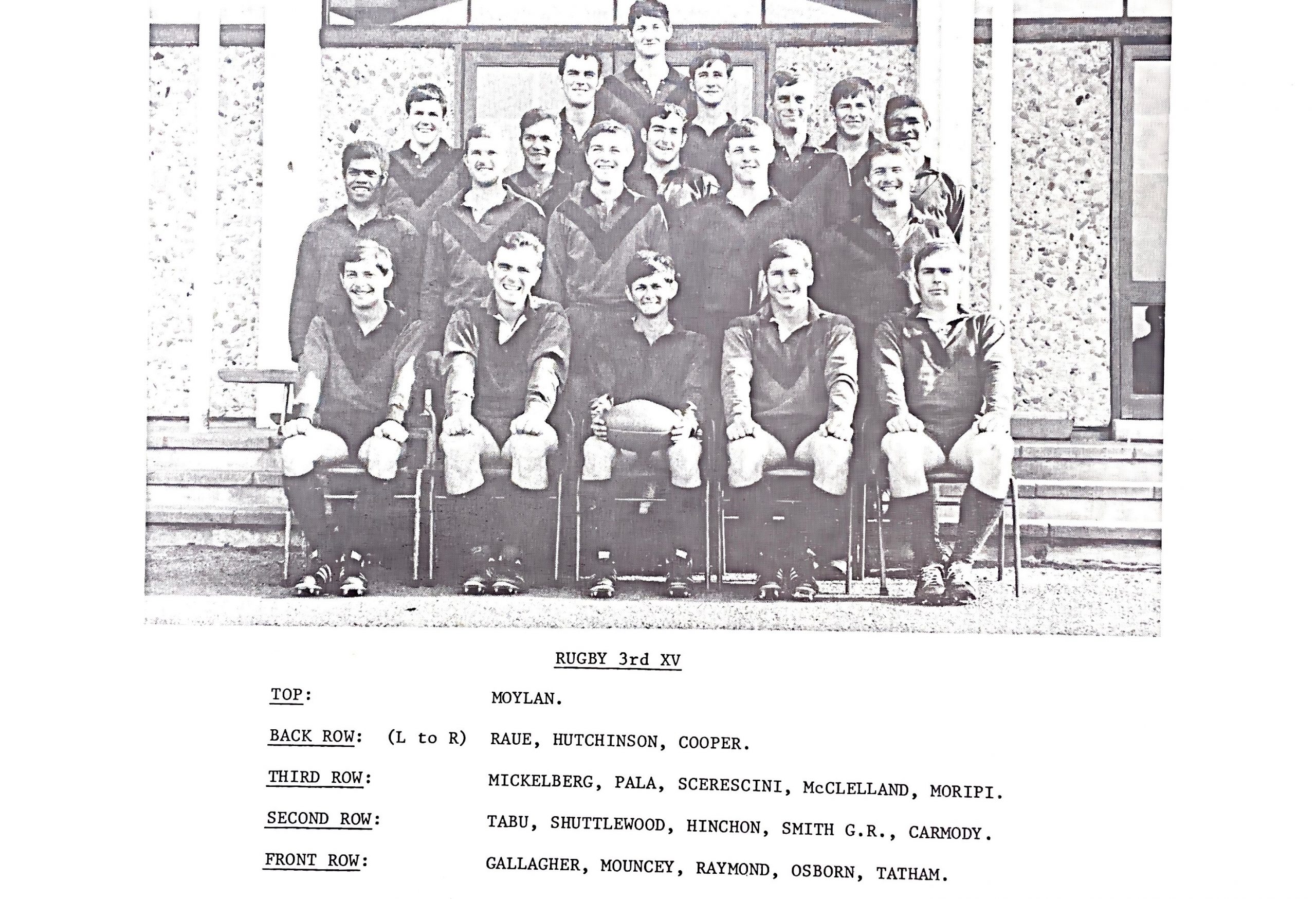
Mark Gallagher joined the Regular Army in 1973 and served for 45 years in both the infantry and the Reserves. Following his retirement in 2018, the experience of navigating the Department of Veterans’ Affairs (DVA) claims process inspired him to give back to his community.

“Like a lot of people in the Defence Force, I suffered some of the usual injuries. I initially advocated for myself but then got to a stage where I needed professional help,” Mark explains.

“In my civilian life I worked in law enforcement and started getting a deeper understanding of the law. I knew if I was struggling, there would be other veterans out there that were finding it more difficult than me.”

Mark sought help from his local Many-Lota RSL Sub Branch and was assisted by seasoned DVA Compensation Advocate Peter Beauchamp OAM. This experience helped him to realise that he too wanted to give back to the veteran community as an advocate.

“My RSL membership is about respecting our forebears who served in the Australian Defence Force (ADF), and that legacy of mateship,” Mark says.

“I’m happy to give back for those veterans who may not be able to advocate for themselves.”

Compensation Advocates Mark Gallagher, Kendall Morrison, Michael Muir

Passing the baton

Under the mentorship of Peter Beauchamp, who helped with Mark’s own DVA claims, Mark eventually worked his way up to becoming a Level 3 Compensation Advocate, which he performs on a volunteer basis at both Manly-Lota RSL Sub Branch and Legacy.

As a Level 3 Advocate, Mark represents veterans up to and including the DVA’s Veterans Review Board, which requires in-depth understanding of legislation and a high level of interpersonal and administrative skill. While this work keeps him very busy, Mark understands the importance of passing on the assistance he received as a fledgling advocate.

“In our program, it’s essential to have succession. I’m creating a legacy that can pick up the work that I picked up from Peter when he went into semi-retirement,” Mark explains.

Mark currently has two trainee advocates under his wing – fellow veterans Michael Muir and Kendall Morrison.

“Training someone to be an advocate is an experiential journey. I sit down with the trainee advocates, help them complete the online Advocacy Training and Development Program (ATDP) sponsored by the DVA, and impart practical skills that they need to develop in their advocacy journey,” Mark shares.

Compensation Advocates Ash Marshall and Mark Gallagher

“Once I get my trainee advocates up to a certain level of independence, I can then focus on more complicated cases, as DVA claims these days are more complex and multifaceted.”

Getting results

Mark’s role as a volunteer advocate involves assisting veterans and their dependants through the DVA claims or appeals process. This journey begins from their first interaction, when Mark invites his clients to share their stories with him.

“During my time in Defence, my parent service was Army, but I spent four years with the Air Force, and I lived in a Navy wardroom for a year, so I have a broad understanding of the Defence Force, which helps because we get clients from all three services,” Mark says.

“While a service background isn’t essential to be an advocate, it does give you empathy and understanding of the challenges that come with service life.”


Once Mark gets to know and understand his client, he then guides them through their claim or appeal process.

“My priority is to get DVA to accept liability for a veteran’s medical treatment. The journey starts with an application for compensation. We need to establish a link between an injury or disease and the veteran’s service. Once the claim is lodged, we act as an interface between the veteran and DVA,” Mark explains.

“Any other compensation that comes after this is a bonus. This could consist of a fortnightly disability compensation payment, a lump sum payment for a whole person impairment, or a combination.

“There’s enormous positive psychological value to a successful claim, whether that be a compensation claim, a retrospective medical discharge claim, or a Veteran’s Review Board claim. There is a sense of moral victory and vindication that someone has listened to them, and the pain and suffering has been acknowledged and recognised as part of their service.”

Mark’s advice to veterans is simple. “Lodge a claim! If it’s successful, then you are going to get treatment for that claimed condition. If it’s not, and there’s grounds to appeal, that can be followed through,” he says.

“If you’ve got a genuine case, we’ll argue that case to the best of our ability. The sooner you get in, the better off you are”.

He says advocacy at Manly-Lota RSL Sub Branch is only possible through the encouragement and support of its members.

Learn more

Need help with your DVA claims or appeals? Learn more about RSL Queensland’s DVA Advocacy program.